Tick Management

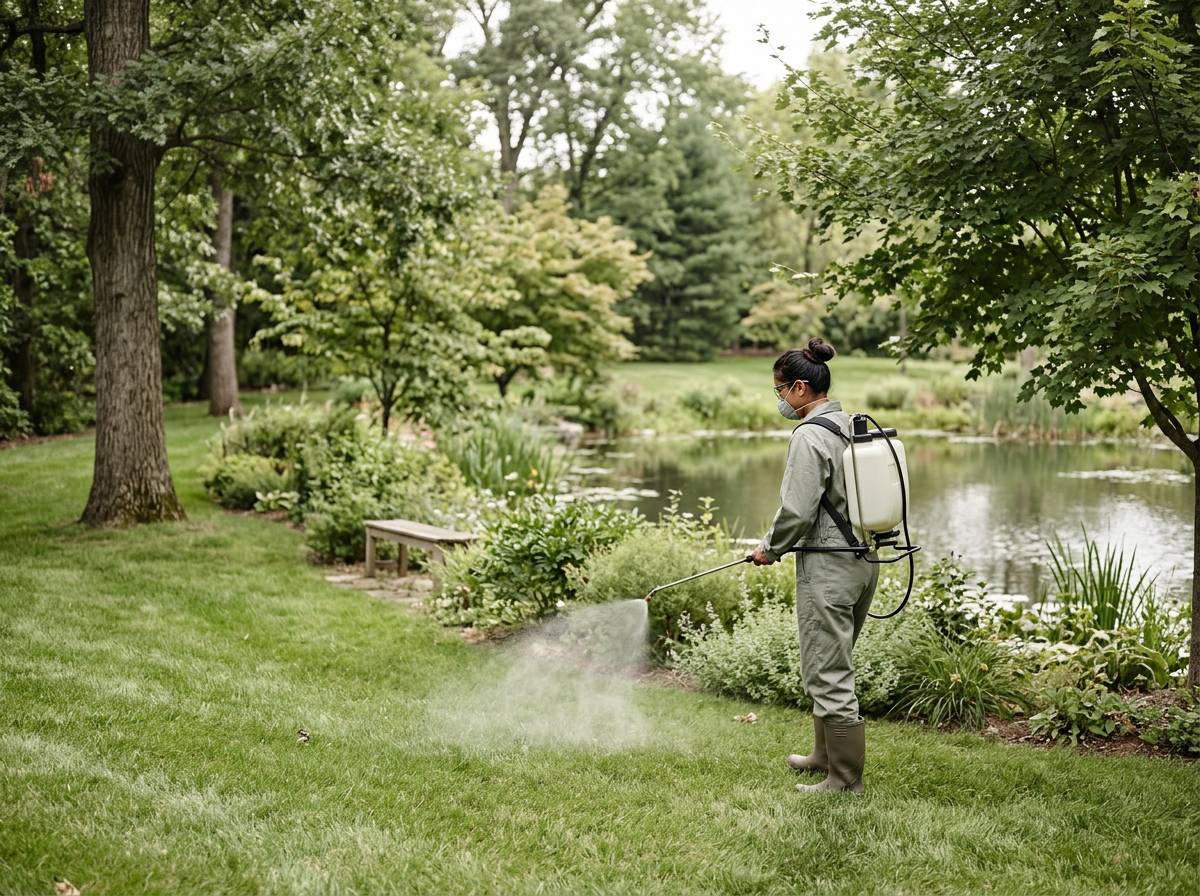
With the increase in tick-borne diseases, Island residents are deploying multiple tools, including botanical oils, to combat these pests. Companies are spraying with frequency. TWI is asking, are these sprays safe to our waterways? See below for some answers.

Are Tick Sprays Safe?

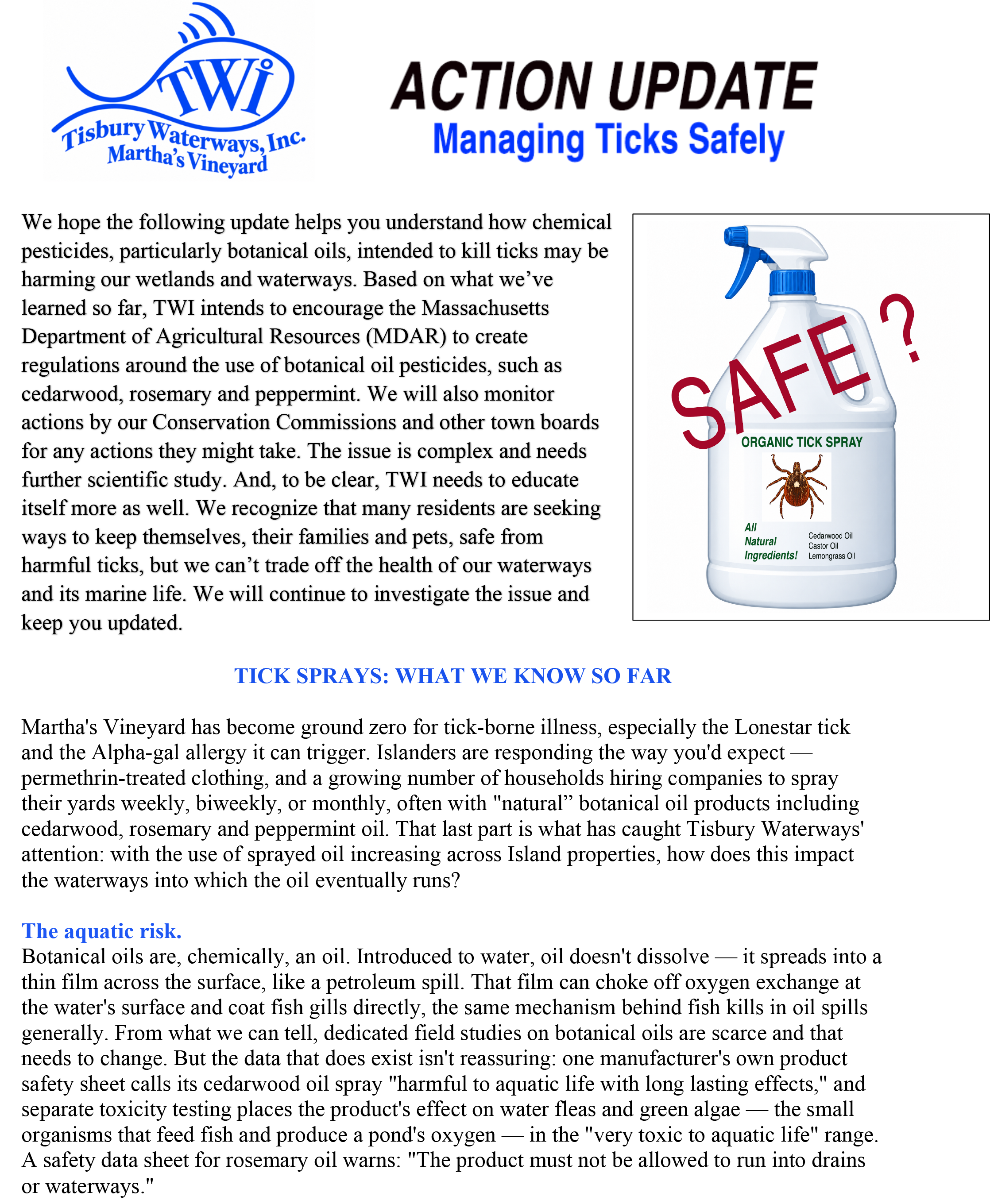
Botanical oils are, chemically, an oil. Introduced to water, oil doesn't dissolve — it spreads into a thin film across the surface, like a petroleum spill. That film can choke off oxygen exchange at the water's surface and coat fish gills directly, the same mechanism behind fish kills in oil spills generally. From what we can tell, dedicated field studies on botanical oils are scarce and that needs to change. But the data that does exist isn't reassuring: one manufacturer's own product safety sheet calls its cedarwood oil spray "harmful to aquatic life with long lasting effects," and separate toxicity testing places the product's effect on water fleas and green algae — the small organisms that feed fish and produce a pond's oxygen — in the "very toxic to aquatic life" range. A safety data sheet for rosemary oil warns: "The product must not be allowed to run into drains or waterways."

Stormwater Management for Homeowners

The Mass.gov Coastal Zone Management’s Stormwater Solutions for Homeowners website, which gives property owners a range of best practices for reducing and treating stormwater on site, now includes a new fact sheet on Preventing Erosion. This fact sheet provides techniques that help slow and redirect stormwater, reducing erosion and capturing sediments and attached pollutants on site.

Other fact sheets on the website include Vegetated Buffers“Green” Lawn and Garden PracticesRain GardensReducing Impervious Surfaces, and Minimizing Contaminants (and stay tuned for a Vegetated Swales fact sheet coming soon).

Each fact sheet includes information on the technique’s benefits; recommended guidelines for locating, designing, implementing, and maintaining specific practices; and a brief overview of regulatory and permitting requirements. Step-by-step instructional guidelines, photos, and figures can help homeowners select the most appropriate projects and practices for their property to help protect local water quality, reduce flooding, and improve wildlife habitats.