Stormwater
Stormwater runoff is rainwater or melting snow that flows across streets, parking areas, lawns, and other surfaces instead of soaking into the ground. Under natural conditions, much of the water from a storm is absorbed by soil and vegetation. In developed areas, runoff collects on roads and properties, overwhelms drainage infrastructure, and carries pollutants into nearby water bodies. These pollutants - which include sediment, nutrients from fertilizers, petroleum residues, bacteria, trash, and other contaminants -reduce water quality, contribute to algae growth, and harm aquatic habitats.
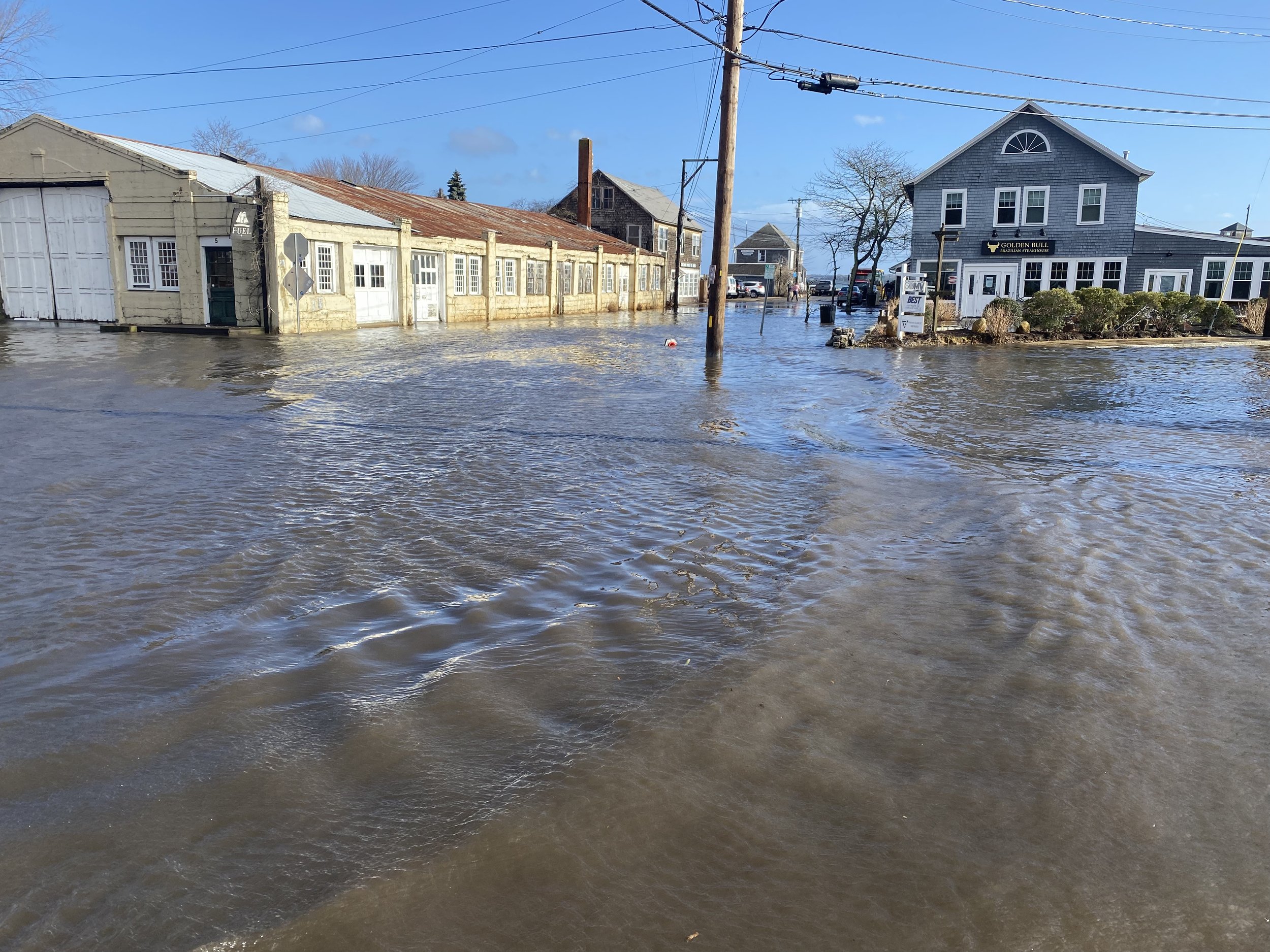
Stormwater runoff can also create practical problems for residents, businesses, and visitors. Heavy flows may erode roadside shoulders, wash out unpaved surfaces, damage drainage features, and transport sediment onto streets or into ditches. When drainage systems are blocked, undersized, or overwhelmed by intense rainfall, water may collect in low-lying areas - as it does at Five Corners in Vineyard Haven - and interfere with transportation, property access, and public safety.
Addressing stormwater runoff requires a combination of public planning, infrastructure maintenance, and individual action. For three decades, TWI has taken a lead role in strategies to protect wetlands and undeveloped land, improve drainage design, maintainin culverts and catch basins, plant vegetation, reduce unnecessary pavement, and use rain gardens or other practices that allow water to infiltrate gradually.
TWI amped up its attention on stormwater management when it joined the Department of Public Works Stormwater Committee in 2017 to address major drainage issues identified by the Environmental Partners Group, Inc. (EPG). Not surprising, EPG listed Five Corners as the worst problem in Tisbury. But it also found that of the 700 plus drainage structures in Tisbury, 93 catch basins were observed as requiring maintenance, including 42 that were non-functioning because they were full of sand or water.
Beginning in December 2018, mitigation efforts got a boost when the Environmental Protection Agency and Dr. James Houle, director of the University of New Hampshire's Storm Water Center, proposed designs for Vineyard Haven that can be developed for immediate impact on the Island and also serve as demonstration projects for other towns with similar problems.

Flooding near the Steamship Authority and Five Corners
Stormwater Management for Homeowners
The Mass.gov Coastal Zone Management’s Stormwater Solutions for Homeowners website, which gives property owners a range of best practices for reducing and treating stormwater on site, now includes a new fact sheet on Preventing Erosion. This fact sheet provides techniques that help slow and redirect stormwater, reducing erosion and capturing sediments and attached pollutants on site.
Other fact sheets on the website include Vegetated Buffers, “Green” Lawn and Garden Practices, Rain Gardens, Reducing Impervious Surfaces, and Minimizing Contaminants (and stay tuned for a Vegetated Swales fact sheet coming soon).
Each fact sheet includes information on the technique’s benefits; recommended guidelines for locating, designing, implementing, and maintaining specific practices; and a brief overview of regulatory and permitting requirements. Step-by-step instructional guidelines, photos, and figures can help homeowners select the most appropriate projects and practices for their property to help protect local water quality, reduce flooding, and improve wildlife habitats.
Last updated November 2026