Moorings
Lake Tashmoo
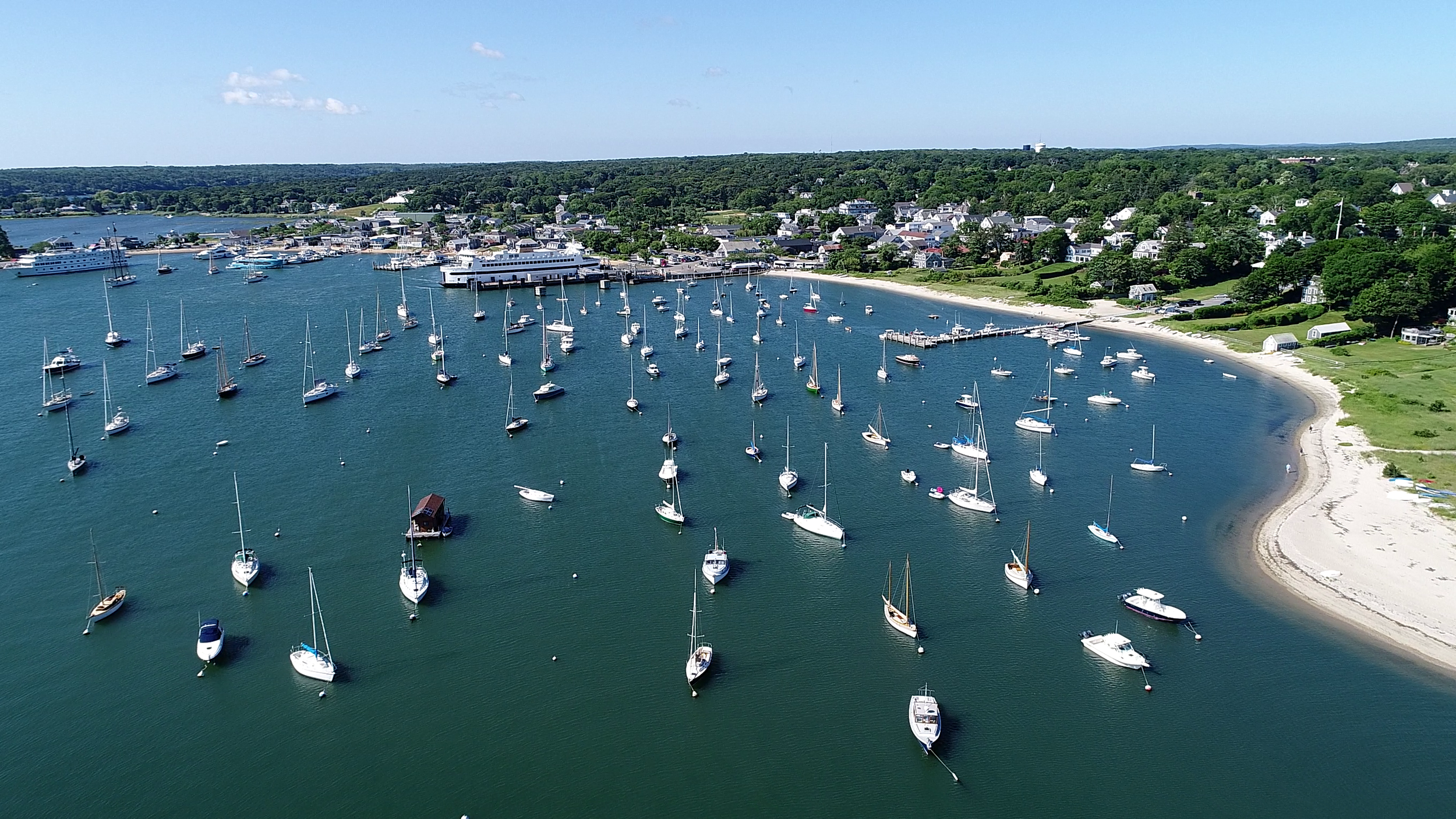
TWI has long been concerned about the number of moorings in Lake Tashmoo. About 300 moorings are already in place and, according to the Army Corps of Engineers another fortys could be installed. TWI disagrees.
Beyond the noise and congestion caused by the influx of visitors, the Lake's precious eelgrass beds are threatened. Eelgrass beds are highly productive communities, acting as a nursery, habitat, and feeding ground for many fish, waterfowl, and invertebrates. Eelgrass also absorbs carbon dioxide and methane—both climate-warming greenhouse gases—and stores them in its root system. By one scientific estimate, an acre of seagrass can sequester 740 pounds of carbon per year, about the same amount emitted by a car traveling 3,860 miles.
Encouraged by TWI and other groups, the Tisbury Select Board issued a moratorium in 2023 on anchoring in Tashmoo to mitigate the damage done by the anchor chains. But additional moorings using conservation anchors have been installed and more approved. A 2026 Harbor Department proposal noted that eight more town moorings and four more commercial moorings were approved, and four more day-use moorings were planned. TWI is concerned that this annual creep of new mooring will continue.
We are continuing our efforts to prohibit more moorings in Lake Tashmoo. Presently, a TWI subcommittee, in partnership with the Martha's Vineyard Shellfish Group, is investigating hiring contractors to do a scientific analysis of how boating and moorings contribute to the degradation of the eelgrass beds.
Last updated: November 2026