
Bioswales
Bioswales, or rain gardens, are designed to capture and absorb rainfall or snowmelt that is collectively referred to as stormwater. When stormwater runs off impervious surfaces (including impacted soils), it accumulates pollutants and delivers them to existing water bodies either directly or indirectly via storm drains. Stormwater pollutants typically include sediment, nutrients like nitrogen and phosphorus, bacteria from animal waste, and oil, grease, and heavy metals from cars. A bioswale can mitigate the damaging effects of stormwater by removing pollutants through a variety of physical, biological and chemical treatment processes.
Results from TWI’s water testing in 2009 revealed that one of the highest pollution counts continued to occur at the bottom of Owen Little Way. Because this is a popular swimming area, TWI saw an opportunity to address serious pollution problems while beautifying the area. With funding from a grant from the Edey Foundation, we were able to dig in.
In 2010, TWI planted its first bioswale at the base of Owen Little Way adjacent to the Vineyard Haven Yacht Club. TWI worked with the Tisbury Department of Public Works to excavate and grade the site to create a swale for the water to flow into (a swale is a wide, shallow, gently sloping depression in the ground.) We filled the base of the bioswale with layers of stone, sandy loam, and topsoil, and we planted hardy native plants designed to withstand drought conditions and extended wet periods.
Bioswale at Owen Little Way, 2009
Since 2010, several activities have helped improve the efficacy of the bioswale. In 2023, a small inlet structure was added to better channel stormwater into the bioswale. This structure, along with many other stormwater control measures, was designed by Dr. James Houle of the University of New Hampshire Stormwater Center under an EPA Southeast New England Program (SNEP) grant.
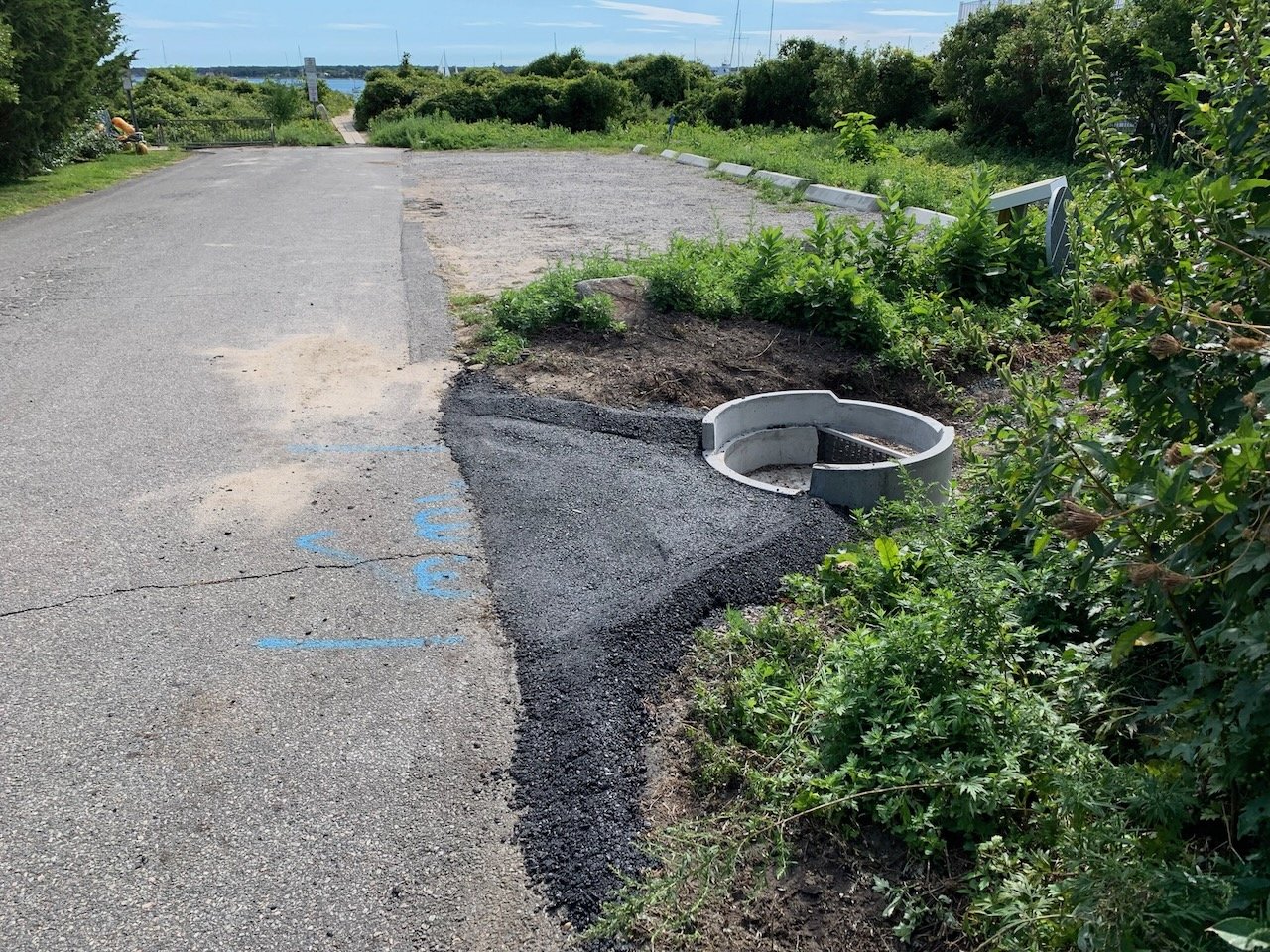
New drainage installed in bioswale at Owen Little Way, 2010
The bioswale needs hands-on maintenance to control weeds and invasive plants. Over time, invasive species have colonized the area, and we frequently clear those out to the extent possible. TWI board members and other volunteers, including high school students on Community Give Back Day, attack the jungle that seems to reappear each spring.
In 2027, Biodiversity Works will be leading the effort to keep the bioswale both beautiful and functional.
TWI encourages towns and homeowners to install bioswales where there is significant stormwater runoff.
Last updated November 2026