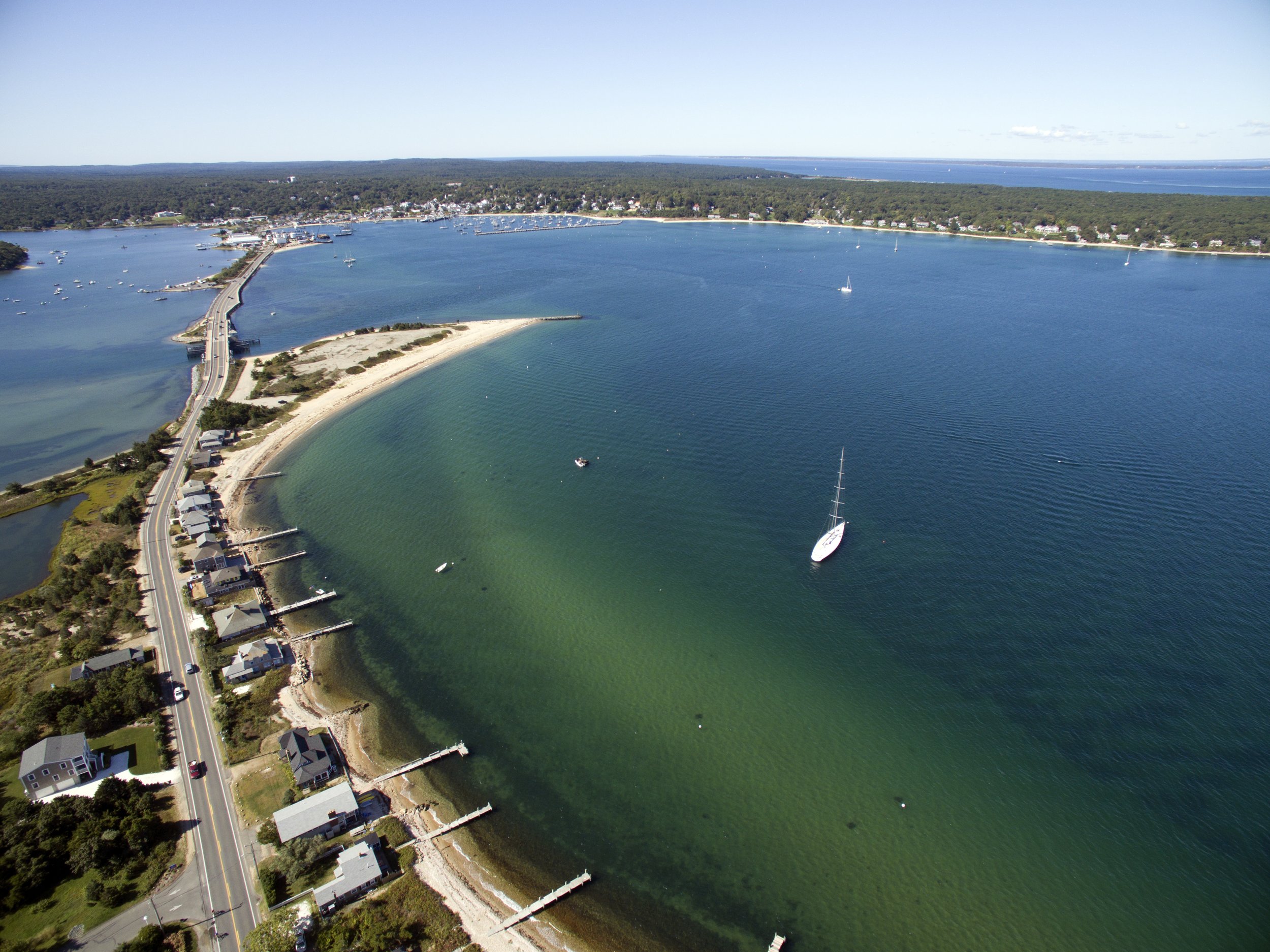
Community presence in matters involving the quality and improvement of waterways in the Town of Tisbury.
Explore Our Waterways
Mission Statement
Tisbury Waterways, Inc. (TWI) is a citizens’ non-profit organization that serves as a steward of Tisbury’s waterways. TWI acts as a catalyst and advocate in support of municipal, educational and research programs designed to improve local marine water quality.
Newsletter
TWI’s work is focused on preserving and improving marine water quality in the Town of Tisbury. Whether you’re visiting our website for the first time or are a regular visitor, we are pleased to keep you up to date with relevant information, both through our website and our Newsletters. We also cover news concerning Town committees and initiatives.
Tisbury Waterways Inc sends out a Newsletter via email twice a year (roughly January and June). If you’re not already on our email list and would like to receive a copy, send us your name and email address using the “Sign Up for The Newsletter” button below or the “Contact Us” button above.

Click above to access the
Adopt A Drain Project Page
Happenings


Join, Renew or Give
Become a TWI member and/or renew your
membership by contributing to support our programs and projects. The following categories of annual membership are available.:
$50 annually - Individual or Family Membership
$100 annually - Supporter (includes membership)
$250 or more annually - Champion (includes Membership)
Click on DONATE below to make your
yearly donation by credit card or PayPal
You make also send your donation by check payable to:
Tisbury Waterways, Inc., Please send to:
Tisbury Waterways, Inc.. PO Box 4375, Vineyard Haven, MA 02568
Want to volunteer your time as well as providing financial support? TWI needs hands-on help in working in our bio-swale and demonstration gardens a couple of times each year. You could also assist with gathering water samples, participate in beach clean-ups, and join in on our newest initiative, Adopt-a-Drain.. If interested, use the “Contact Us” feature at the top of of the Home Page to send us a note regarding your interests. Thanks.
Board Of Directors
Melinda Loberg, President
Rick Homans, Vice-President
Lorraine Wells - Sandy Cannon-Brown, Secretary/Clerk
Gerard (Gerry) Hokanson, Newsletter Editor/Website Coordinator
Bob Landreth, Tashmoo Liaison
Connie Alexander
Ann Fay Lawton
Jean Lewellyn
Edwin (Gus) Lewis
Beverly Potsaid